Article
What is the mind?
Philosophies and religions have given many meanings to the word "mind". But we live in an age that runs on science and technology. So it is only logical to define the mind through modern medical science.
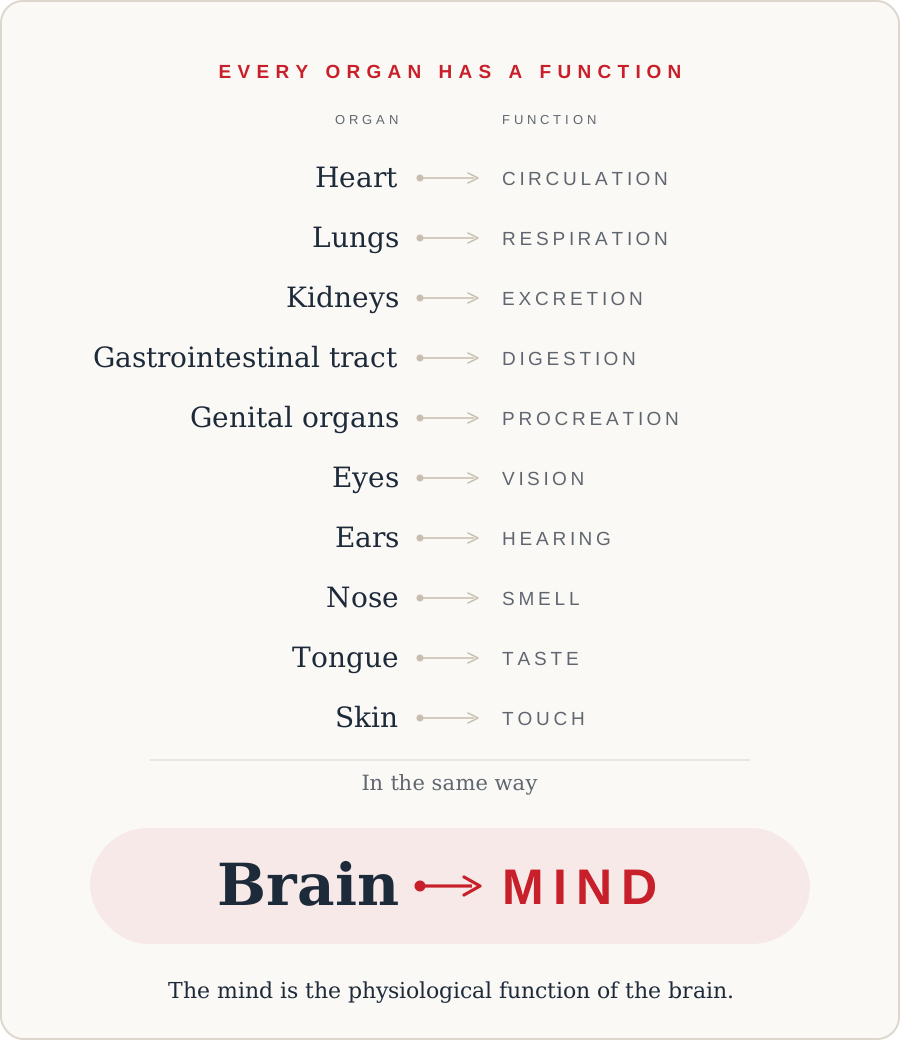
Scientifically speaking, the mind is nothing but the physiological function of the brain.
To understand this, look at how the body works. Every organ has a specific and vital job.
- Heart: it pumps blood round the body. This is circulation.
- Lungs: they take in air and give out carbon dioxide. This is respiration.
- Kidneys: they clean the blood and remove waste. This is excretion.
- Gastrointestinal tract: it breaks down and absorbs food. This is digestion.
- Genital organs: their biological service is procreation.
- Sense organs: we know the world through vision (eyes), hearing (ears), smell (nose), taste (tongue) and touch (skin).
In the same way, the brain performs a specialised function in our body. That function is called the mind.
The central government of the body
The brain does more than produce our thoughts and emotions. It also keeps central control over every other organ.
To put it simply: if the brain is the Central Government, the other organs are the State Governments. Each does its own duty, but all of them work under the coordination and command of the central authority, the brain.
The reports travel both ways. The states keep the centre informed, and the centre responds. This is why a troubled mind can upset the stomach, the heart and the sleep, and why an illness of the body can change the mood.